When to actually come: a month-by-month read on the Key's seasons

“When’s the best time to come?” is the question we get more than any other, and the honest answer is: depends entirely on what you want. The Key isn’t one place across the year — it’s four or five different places wearing the same sand. Here’s the real read on each, so you can pick the trip you actually want instead of the one the brochure is selling.
March–April: Spring break and the cobia run
The water’s still cool — too cool for a lot of people to swim comfortably until late April — but the air is gorgeous and the fishing turns on. This is when the cobia run brings the boats out and the surf-tower crowd starts paying attention. The wildcard is spring break: certain weeks bring a younger, louder crowd to specific stretches. It’s manageable if you’re not staying on top of it, and the AL side tends to run more family-calm than the Florida Panhandle reputation suggests. Rates are mid. Weather is some of the best of the year if you’re not set on swimming.
Come now if: you want perfect walking-around weather, fishing, and lower crowds than summer, and you don’t mind cool water.
May: the quiet sweet spot before the gates open
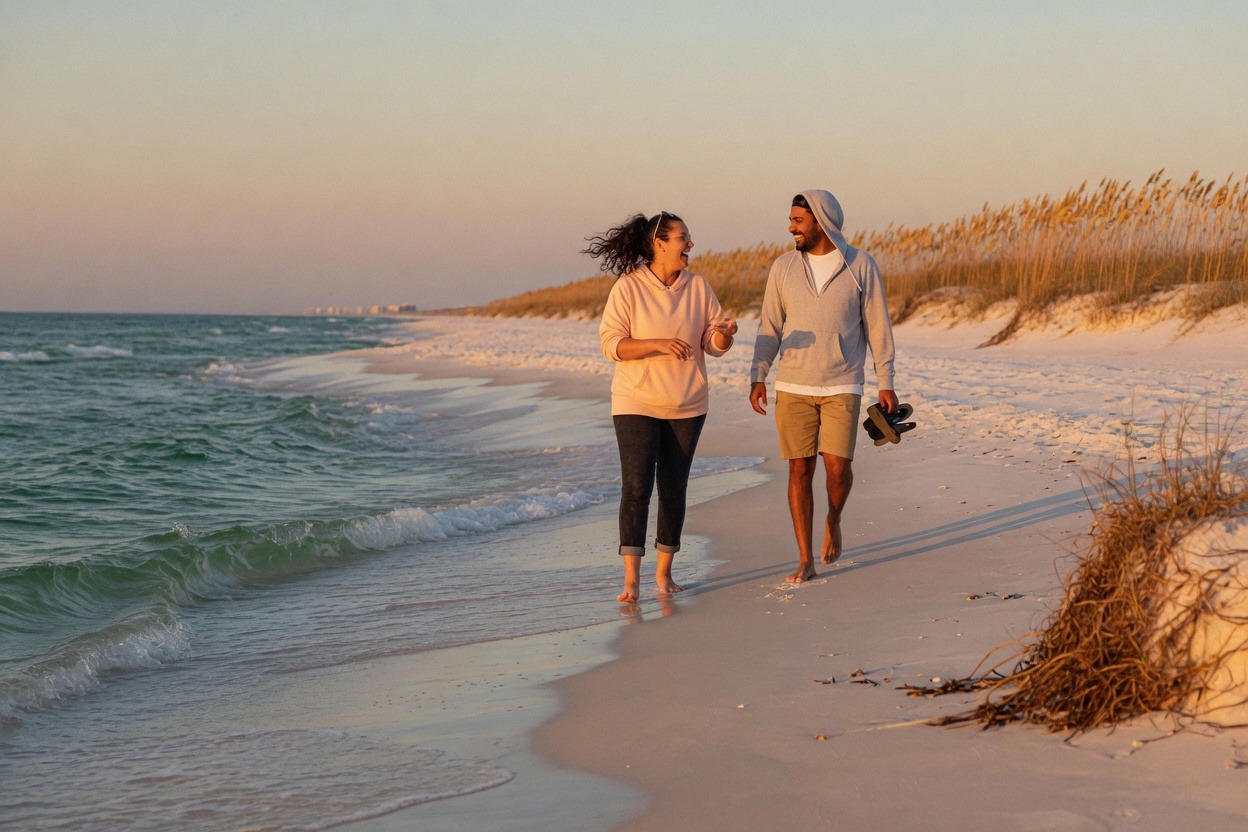
Our favorite month, quietly. The water’s warmed up enough, the summer wall of crowds hasn’t fully arrived, school’s not out everywhere yet, and the whole place feels like it’s stretching before the season. Memorial Day weekend flips the switch — before it, May is close to ideal.
Come now if: you want summer water without summer crowds. This is the insider pick.
June–August: peak, full stop
Hot, humid, crowded, and alive. This is the season the local economy runs on, which means everything’s open, every charter’s booked, every restaurant has a wait, and the beach is a city. It’s a great time to be here if you lean into it and a frustrating one if you fight it — which is exactly why we wrote a whole peak-season survival guide. Afternoon thunderstorms are a near-daily thing and mostly pass fast. Water’s bathtub-warm. Rates are highest. Book early or don’t come.
Come now if: you want the full, loud, everything-open beach-vacation experience and you’re willing to time your days around the crowds.
Late September–October: locals’ summer
The single most underrated window. The crowds thin out the week after Labor Day, the water stays warm well into October, the rates drop hard, and the weather is frequently perfect. We call it locals’ summer and we’d genuinely prefer you not tell too many people. The one asterisk: it’s the back half of hurricane season, so you’re trading crowd relief for a little weather risk — worth watching the forecast, not worth avoiding.
Come now if: you want warm water, thin crowds, and good rates, and you can keep half an eye on the tropics.
November–February: snowbird season and the real off-season
Cool, quiet, and a completely different vibe. The snowbirds arrive — winter residents from the Upper Midwest and Canada who settle in for months — and the pace goes slow. Swimming’s mostly out (the Gulf gets genuinely cold), but beach-walking, fishing, fresh-air weather, and rock-bottom rates are all on. Some seasonal spots close or cut hours. It’s the move for people who want the coast without the circus, and for anyone who finds an empty winter beach more restorative than a packed summer one. There’s the Polar Bear Dip on New Year’s for the people who insist on getting in the water anyway.
Come now if: you want quiet, cheap, and contemplative, and you’re here for the place rather than the swim.
The one-line version
- Best weather, fewer people: late April, May, October.
- Best water + everything open: June through August (peak prices, peak crowds).
- Best value + still warm: late September into October — locals’ summer.
- Best quiet: November through February.
- Best fishing: depends what you’re after, which is what the Friday Report is for.
Whatever you pick, check Beach Today before you load the car — the Gulf writes its own schedule, and the flag has the final say no matter what the calendar promised.
— Chris